Guides Training Basics
8 weeks – 12 months
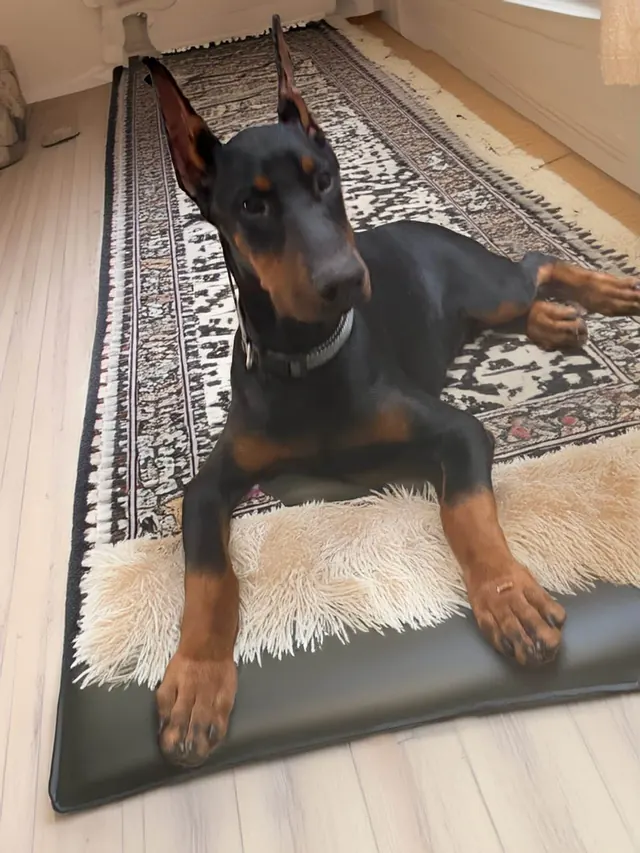
Training basics for Doberman puppies
Updated November 2026 · By Owego Dobermans
The short answer
Start with name, sit, down, come and loose-leash walking in sessions of a few minutes, using food rewards. Redirect nipping to a toy and pause play when teeth touch skin. Teething runs from about 3 to 6 months. Enroll in a puppy class, and teach calm habits now, because a 70-pound adult jumping up is a different problem.

First commands
| Command | Why it matters | Start |
|---|---|---|
| Name | Gets attention before every other cue | Day one |
| Sit | The polite default: greeting, doors, meals | Week one |
| Come | Safety. Always make it the best thing that happens. | Week one |
| Down | Settling in public and at home | Week two |
| Leave it | Safety with food, trash and dropped items | Weeks two to four |
| Loose leash | A strong adult Doberman must not pull | From the first walk |
The AKC has step-by-step instructions for the core commands.
How Dobermans learn
Dobermans are smart and want a job. They also get bored with repetition. Keep sessions to a few minutes, stop while your puppy is still keen, and mix training into daily life: sit before meals, wait at doors, come for a treat in the yard. Use food and play as rewards. Harsh corrections tend to backfire with this sensitive breed.
Nipping and mouthing
Mouthing is normal puppy behavior (AKC). Teach a soft mouth early:
- Keep a toy in your hand during play so there's always something better to bite.
- When teeth touch skin, stop all interaction for a few seconds, then resume.
- If it continues, calmly end the game. An overtired puppy needs a nap, not more play.
- Never play rough with hands, and ask children not to run from a nipping puppy.
Teething
Puppy teeth start falling out at about 3 to 4 months to make room for 42 adult teeth (AKC). Expect more chewing and possibly some blood on toys. Offer frozen chews, rotate sturdy toys and keep shoes out of reach. If baby teeth remain after the adult teeth come in, mention it to your vet.
Polite habits to start now
- Four on the floor: reward greetings with all feet down. Turn away from jumping.
- Settle: reward calm lying on a mat.
- Alone time: short, positive periods alone help prevent separation stress in this people-focused breed.
Choosing a class
Look for a puppy class that uses reward-based methods, keeps groups small and requires vaccines. Basic obedience after that, and maybe a sport like rally, tracking or nose work, gives a Doberman the mental work they need. The AKC notes Dobermans need daily exercise and mental challenges.
Frequently asked questions
At what age can you start training a Doberman puppy?
The day they come home, usually around 8 weeks. Keep sessions short and fun.
Why does my Doberman puppy bite so much?
Teething, overtiredness and play. Redirect to toys, build in naps, and pause play when teeth touch skin. Most puppies improve a lot by 6 to 7 months.
Are Dobermans easy to train?
They're among the most trainable breeds, but they need consistency, mental work and a calm, reward-based approach.